
I used a vacuum packing cube for a trip. Here's what I'd tell other travelers
I found that the vacuum packing cube created noticeably more space in my carry-on, but it also introduced a few inconveniences.

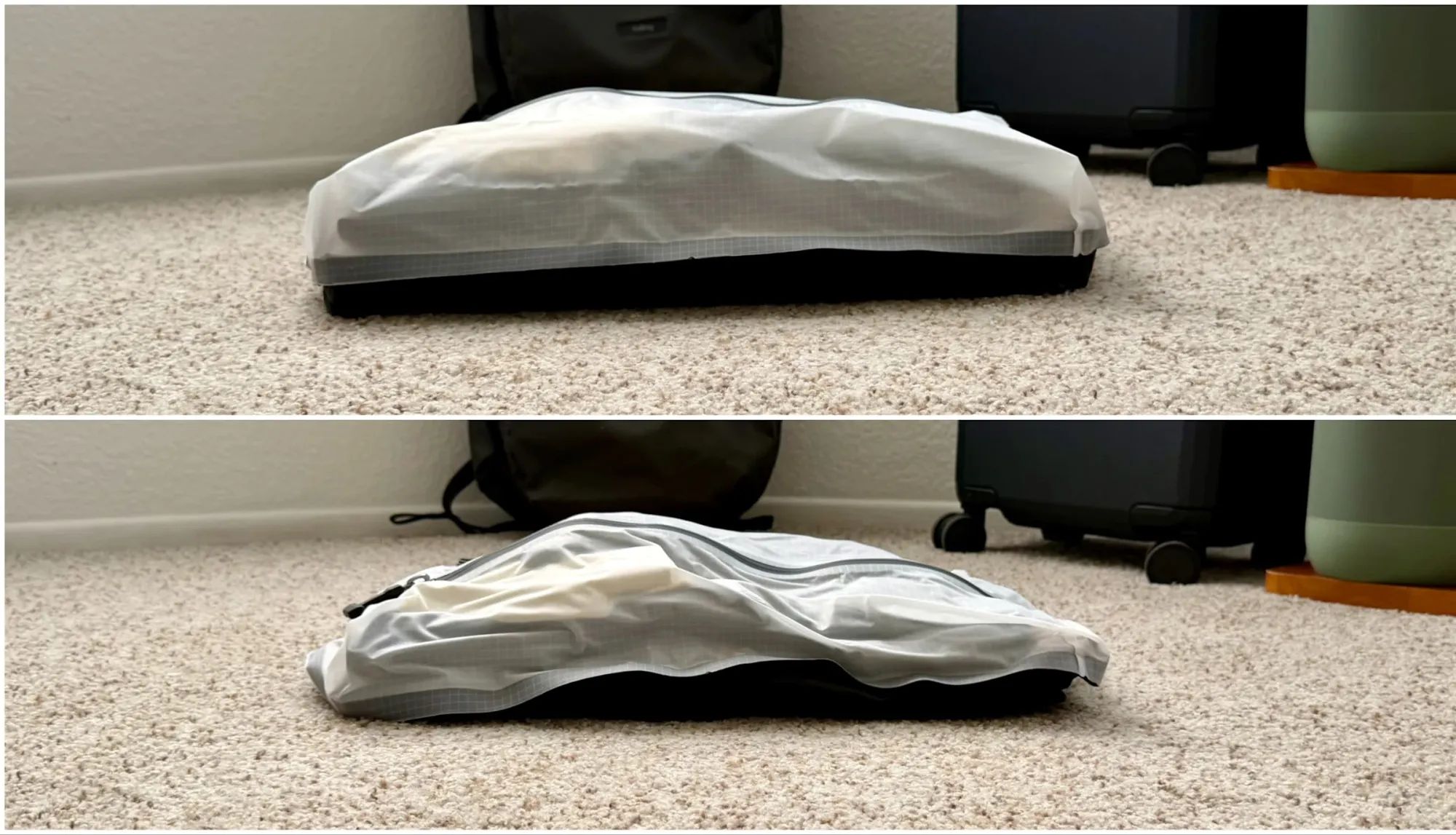
The temptation to pack as much as possible into your carry-on suitcase is hard to ignore. There is a wide variety of packing cubes that can help you make the most of the space. I reviewed more than a dozen of them for Business Insider. But the basic compression packing cubes can only take you so far.
The next step is to use a vacuum-sealed packing cube, which can actually suck the air out and compress a travel packing cube even more. You will absolutely be able to fit more clothes into your suitcase, but there are a few trade-offs with using one of these products. You’ll need to carry a pump, for one thing.
I took the Statik NanoPack Travel Kit on a cross-country trip to get a real sense of whether this packing cube style is actually worth it. Here’s how it works and who I recommend it for.
How a compression cube with an electric pump works

First, the benefit of using ordinary packing cubes for travel is that they offer better organization than just tossing everything into a carry-on. When you arrive at your destination, you can often just transfer the cubes from your bag into a dresser, too.
Compression packing cubes are the next step and utilize a zipper to squeeze down excess material. This won’t really let you squeeze in more clothes, but it might allow a little more room for odds and ends to squeeze in around the packing cube.
Vacuum-sealed packing cubes are the most extreme version of this product type. They can actually suck out excess air and shrink the size of clothes. I used the Statik NanoPack 15L cube, but there are several sizes and brands out there.
What I noticed about using a vacuum packing cube
I packed two pairs of pants, a few t-shirts, and some running clothes in the NanoPack. The zipper on this one is thick and stiff. It has to be to make sure that air doesn’t creep in while traveling. The good news is that when I arrived at my destination, the NanoPack was still fully compressed.
Pulling the air out of it shrank its height noticeably. Using this packing cube helped create extra space in my carry-on. At first, it felt a bit like magic. You really can add more clothes or bring home an extra souvenir.
During the trip, however, I realized there are several things to consider when using a vacuum packing cube.
- You’ll need to carry the pump with you and keep it charged
- The pump is loud. Early travel could be disruptive
- A vacuum cube keeps all the clothes close
Creating extra space in your bag is a little necessary because you’ll need room to pack the pump. The Statik NanoPack’s pump isn’t huge and fits in a palm, but it does need some room. If it doesn’t fit in the carry-on, it might be able to go in your personal bag if you’re flying.
Watch out for the noise. As I was finishing getting my bag ready to leave at 6:00 AM, I immediately noticed how loud the tiny pump was as it pulled air out of the packing cube. If you’re in a hotel, this might be less of an issue. But if you’re staying with family or friends, this could be highly disruptive.
Another thing to keep in mind is that all the clothes packed in the cube do get pulled close together. That means if you do have sweaty gym clothes or a damp swimsuit, those items will be squeezed right up next to all your other clothes. If one thing is wet, most things will end up wet.

Should you buy a vacuum packing cube?
Even with all the items to consider, I’ll be using the Statik NanoPack Travel Kit on future trips. I think a lot of people could benefit from its use, but not everyone. I would recommend a vacuum seal packing cube for the quintessential vacations, where you’re staying in a hotel and might need an extra sweater or pair of pants. This can help you fit that extra item without forcing a complete re-thinking of your packing management.
On the flip side, I wouldn’t recommend a vacuum-sealed packing cube for camping where battery power can be sparse. I would probably avoid them for road trips, too, if you’re constantly opening and closing bags. If you have the freedom to bring a bigger bag, or two instead of one, then skip the vacuum-sealed options and consider some compression packing cubes instead.