
I own a Tesla Model Y. The Rivian R2 impressed me in ways I didn't expect
After owning EVs since 2018 and driving a Model Y for years, I found Rivian's new SUV roomier, smoother, and more compelling than I expected.

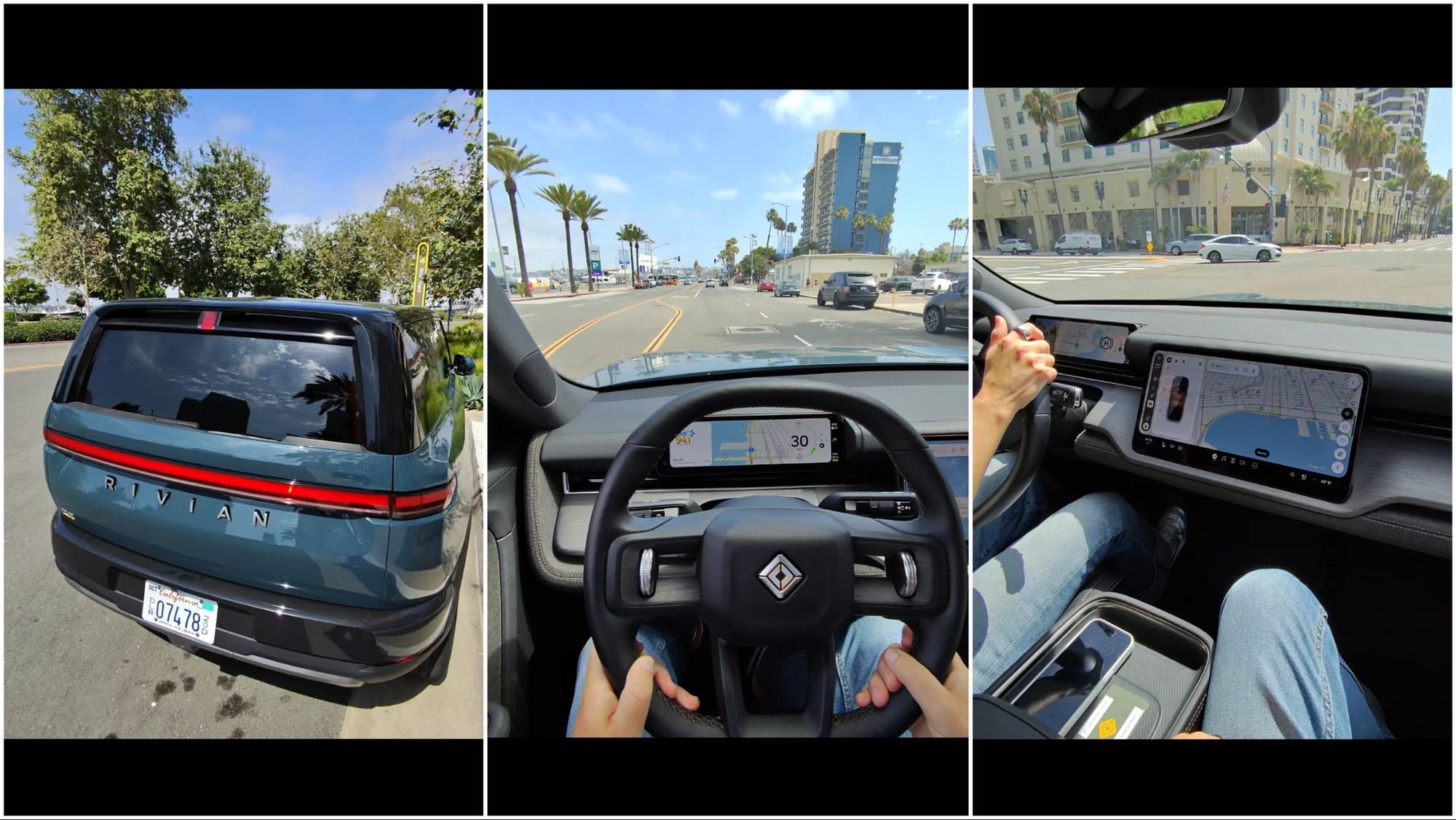
Now that the smaller, less expensive Rivian R2 has hit the market, people shopping for a mid-sized SUV have some more serious choices to make. The Performance model of the R2 starts at $57,990 right now, but lower-priced configurations will be available, bringing the starting cost down to $44,990.
As someone who's owned an electric vehicle since 2018, and driven a Model Y since 2021, I was curious to see how the R2 really compared to it, in person. So, I took a quick test drive with my whole family to find out.
From my time spent actually driving the R2 and crawling around it, it's clear that this is a compelling EV. It drives smoothly, like the bigger, pricier R1S, but it reins in some of the costlier components that make the R1S nearly $80,000.
Although I've only had a little time with the R2 thus far, I have spent extended time with the R1S and R1T. From owning EVs to multiple test drives, I have a good sense of the EV market. Here are the initial things that stuck out to me, and why the R2 is still tempting despite some flaws.
How the Rivian R2 differs from the Model Y
The Rivian R2 Performance and the Tesla Model Y Performance are very similar in a lot of ways. They both start at $57,990 and have a similar set of features, going down the spec sheets. While the Model Y is a tad faster at going 0 to 60 in 3.3 seconds, compared to the R2's 3.6 seconds, the R2 has a rated range of 330 miles compared to the Model Y's 303 miles.
They both use NCAS ports for charging. The port is also in the same location on both vehicles, on the back left.
Of course, there are plenty of little details that separate the two, but more interesting are the more meaningful ways they differ. Rivian identifies under the label of all things "adventure." Tesla is much more urban-focused. To that point, the R2 has a higher towing capacity, 4,400 pounds, compared to the Model Y's 3,500 pounds.

The R2 has ground clearance of 9.6 inches versus 6.4 inches on the Model Y. It has 90 total cubic feet of storage, while the Model Y has 76. The R2 is about three inches shorter in length, but three inches taller than the Model Y.
In my test drive, the R2 did feel roomier across the front seats and in the back. Even though the numbers bear that out, it's hard to pinpoint how or where it feels bigger, but it does.
Driving electric is quiet and smooth, but the R2 felt smoother with better handling than my Model Y. I also really enjoyed having two front screens, with one directly behind the steering wheel. I don't mind Tesla's one-screen approach, but two are better for seeing maps while the passenger is adjusting music or doing something else on the center console.
While the R2 mostly foregoes physical buttons, the two haptic wheel knobs on the steering wheel are truly a delight to use. Compared to the roller knobs on the Model Y, they are night and day better. Since I’m already used to a buttonless car, I like the R2’s approach. However, no matter how nice the haptics are, only having two real buttons will probably take most people time to adjust to.

There are at least a few big things to know about the new Rivian R2
I was highly impressed by the R2 in my first test drive. But it's not all roses. There are a few big items to know.
The biggest disappointment for people moving from non-Tesla brands to a Rivian is that there's no CarPlay or Android Auto. Most other manufacturers offer that interface for people's phones. Rivian doesn't. Luckily, Tesla owners don't have that luxury either, so they won't feel any loss there.
As part of the entertainment suite, it's worth noting that the R2 doesn't have an AM/FM radio tuner. You can listen to some local stations, but you'll need to do that through the iHeartRadio app. Thankfully, this app is free to use without the $15 per month Connect+ subscription, which is needed to use the integrated Apple Music and Spotify apps.
The reason those apps and other services require the Connect+ subscription is that they're using the R2's cellular connection. Paying $15 per month or $150 per year isn't cheap. Tesla's Premium subscription is $10 per month or $100 per year, for comparison.
Rivian's difference here is that you can use your car as a Wi-Fi hotspot for other people riding along, whereas that's not a feature or option for Tesla vehicles.

The one other negative that stuck out to me seeing the car in person was its charging port cover. With the Model Y, and all Teslas, you can push a button on the screen to open the port cover from inside the car, or you can tap the cover with your hand to raise it. (You can even press the charging cable button next to the port to open it hands-free.)
The R2's port cover has to be physically pushed to open its electronic-free latch. It's disappointing that you can't open it from inside the car, but there are pros and cons to the choice. The thing I really didn't care for is that the cover felt flimsy. It could be easy to mess up or break.
Time will tell how it holds up, but the build quality of this piece wasn't like the rest of the car and stood out as cheap, while the rest of the vehicle seemed well-considered.
Is the Rivian R2 worth buying?

Rivian started taking reservations for its R2 vehicle in early 2024. For some people interested in the EV market, this SUV couldn't have come sooner. While technically available to reservation holders now, the only configuration is the $57,990 Launch Edition. This pre-packages things like Autonomy+ and the tow hitch.
The Premium model ($53,990 starting) will be available in late 2026, while the Standard model ($44,990 starting) will become available in the spring and summer of 2027.
There are lots of considerations for buying a new car. But in terms of this particular EV, compared to the current landscape, the R2 is tempting.
The two foundational things it offers are a NACS port and a range of over 300 miles (most configurations). That makes it suitable for trips and daily driving. But beyond those things, the R2 just feels like a well-rounded family car. It has room where it needs it, but remains fairly compact.
It might not be as luxurious as Volvo’s or BMW’s similar EVs, but the R2 is fully capable and should prove to be a great vehicle, day in and day out.