
Dyson’s CameraJet isn’t just a $500 toothbrush. It might be the wildest gadget I’ve ever seen
This toothbrush can see gaps between your teeth and floss as you brush. It can even livestream what’s happening inside your mouth.

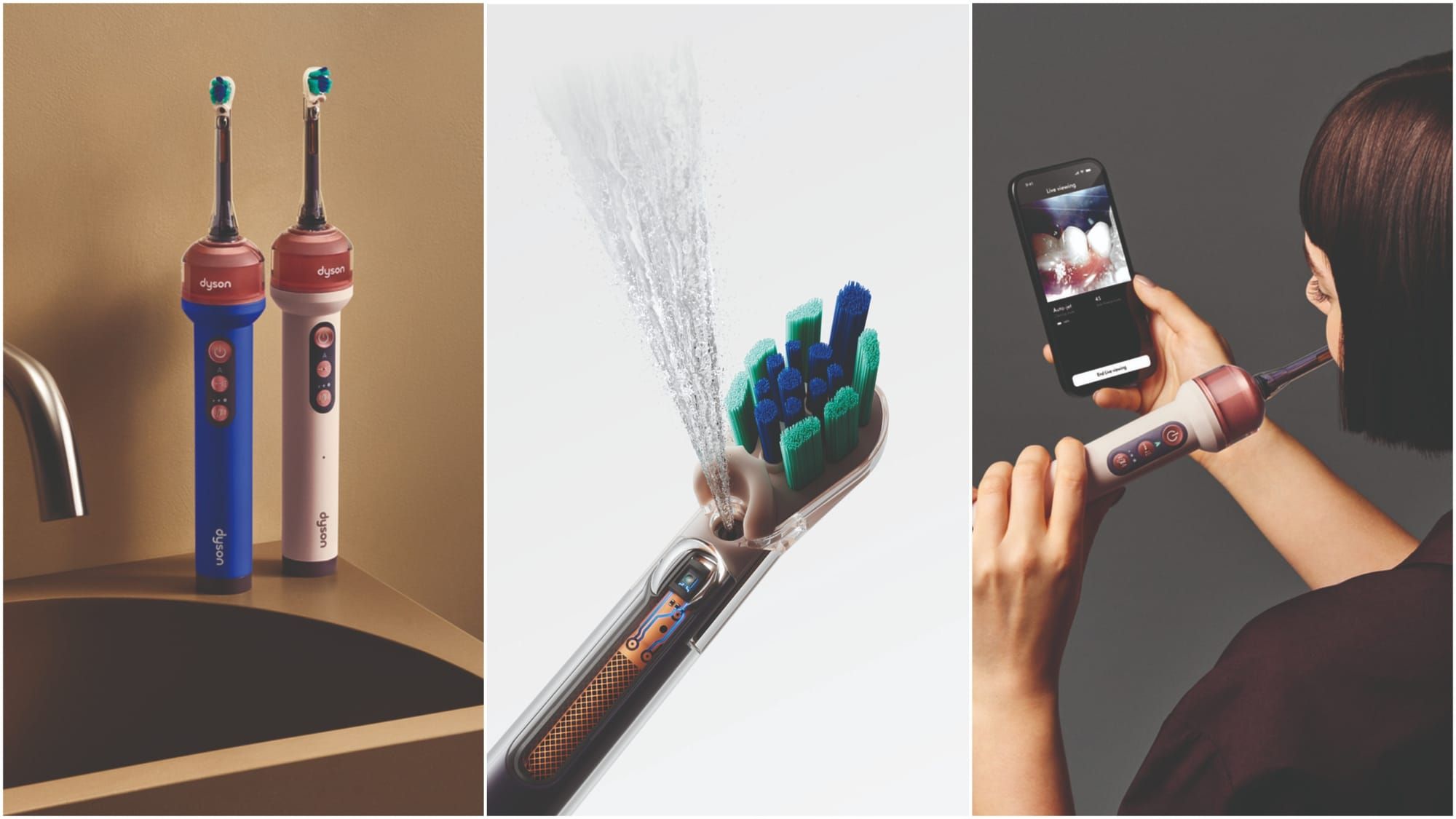
There are so many unbelievable things about the Dyson CameraJet toothbrush that it’s almost hard to know where to begin. For one, the company that revolutionized the vacuum market is now taking on oral care and making a toothbrush.
Instead of bogging you down with a dense write-up about this wild gadget and the technology it's using, I’m going to break out the highlights in a more bulleted list. I’ll have an in-depth, hands-on review in the future.
Despite covering the tech industry for over 13 years, I can’t recall a product that has been this surprising—and this real. Usually these kinds of overambitious devices never make it to market. But make no mistake. This is an actual product that's available to buy.
There’s a camera on the toothbrush that sees gaps in your teeth
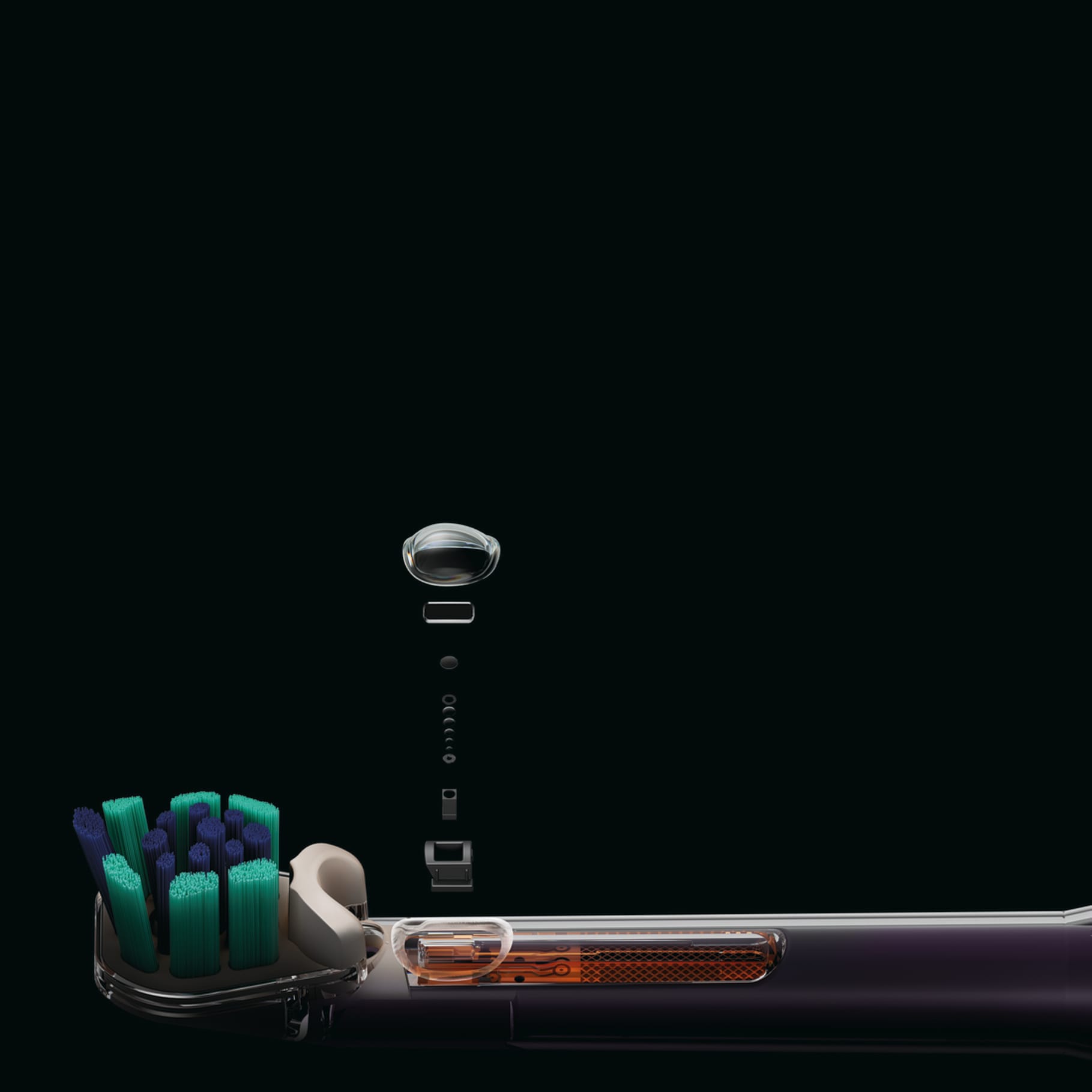
There are a lot of cool things about the Dyson CameraJet, but the crux of it is that it uses a built-in camera to identify gaps in your teeth and floss the gaps while you brush. The concept is straightforward, but the execution is wild.
The toothbrush has a 100,000-pixel macro lens camera that’s powered by Dyson’s “Gap Optical Targeting.” It looks at 28 live images per second to target the gaps. Then, within 100 milliseconds of seeing a gap, a conical jet of mouthrinse is used to floss as you brush—two birds, one stone.
Dyson made its own toothpaste
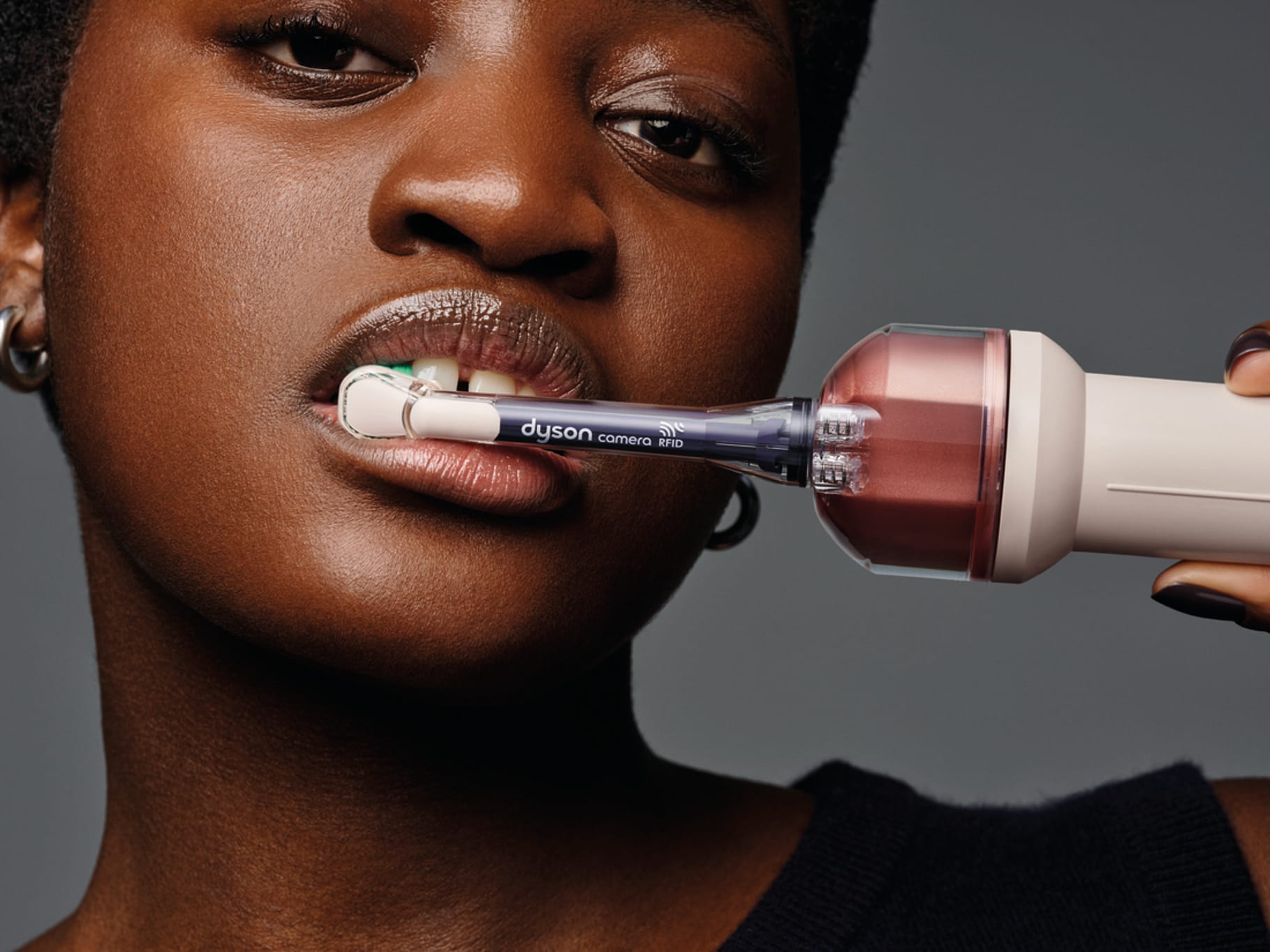
If a camera is going to see your teeth as you brush, then it can’t be covered with white foamy toothpaste. So, Dyson created its own proprietary non-foaming one to get around this hurdle.
The toothpaste is formulated without SLS, which the company notes is a common foaming agent. I’ll report on its taste at a later date. If you want to use your own, it’ll need to be an SLS-free (clear) mouth rinse and SLS-free toothpaste.
You can livestream video from inside your mouth
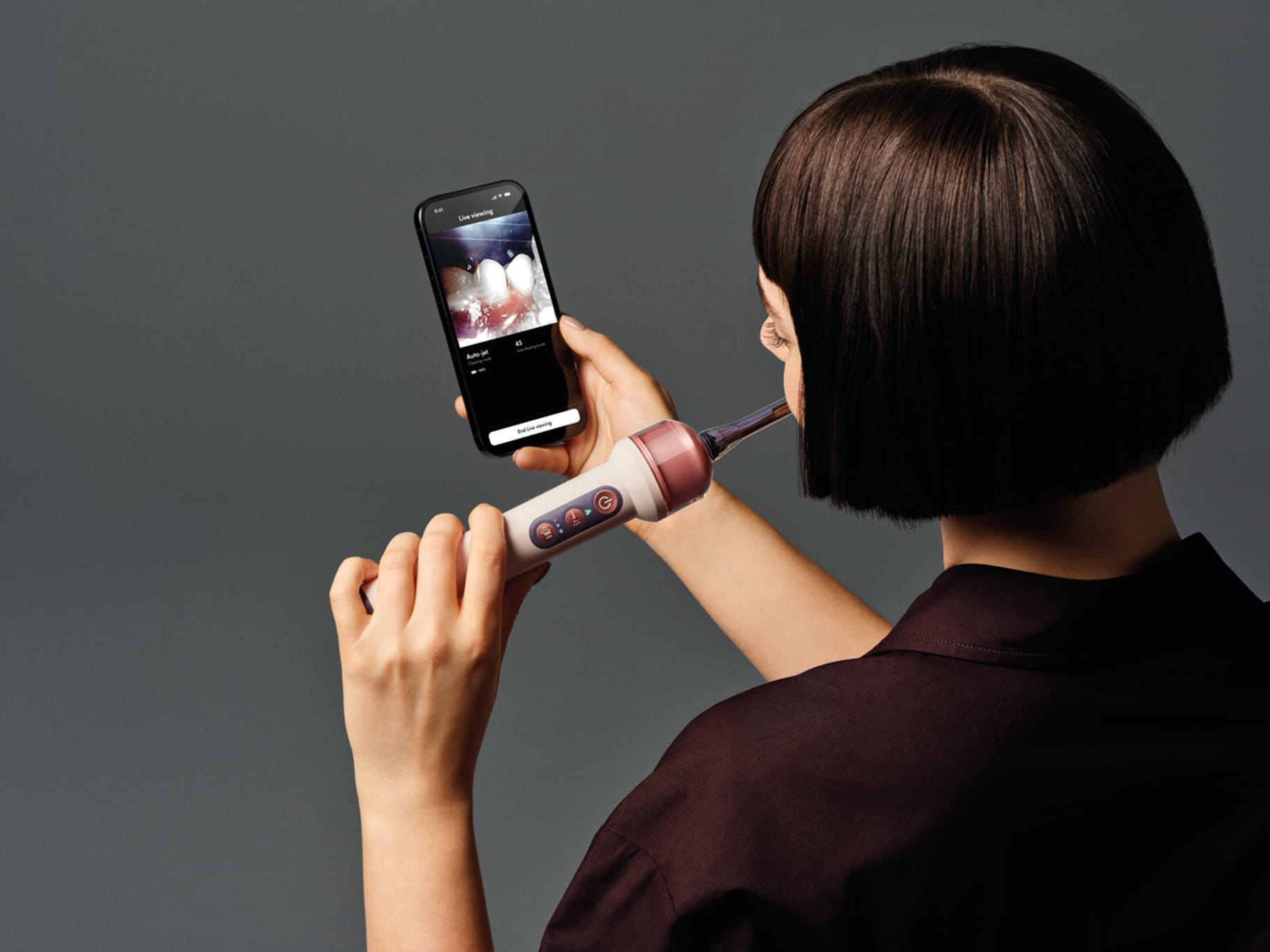
If it’s not enough to just look in the mirror as you brush your teeth, you can use the Dyson mobile app to get a live viewing experience.
The brush can be used as an endoscope to show you what it sees, just like at the dentist. The company says the camera is only active when it's “auto-jetting” during brushing or when you’re doing a live viewing. It also says that no images are recorded or stored—locally or in the cloud—to keep it private.
The Dyson mobile app offers coverage maps and brushing insights
Beyond live viewing, the MyDyson app will also do guided cleaning, coverage mapping, and personalized brushing insights.
Basically, the app will tell you which areas of your mouth you’re getting well and which areas need more attention. Plus there are how-to videos, flossing insights, and settings to customize intensity.
The water jet isn’t a sharp, needle-like sensation
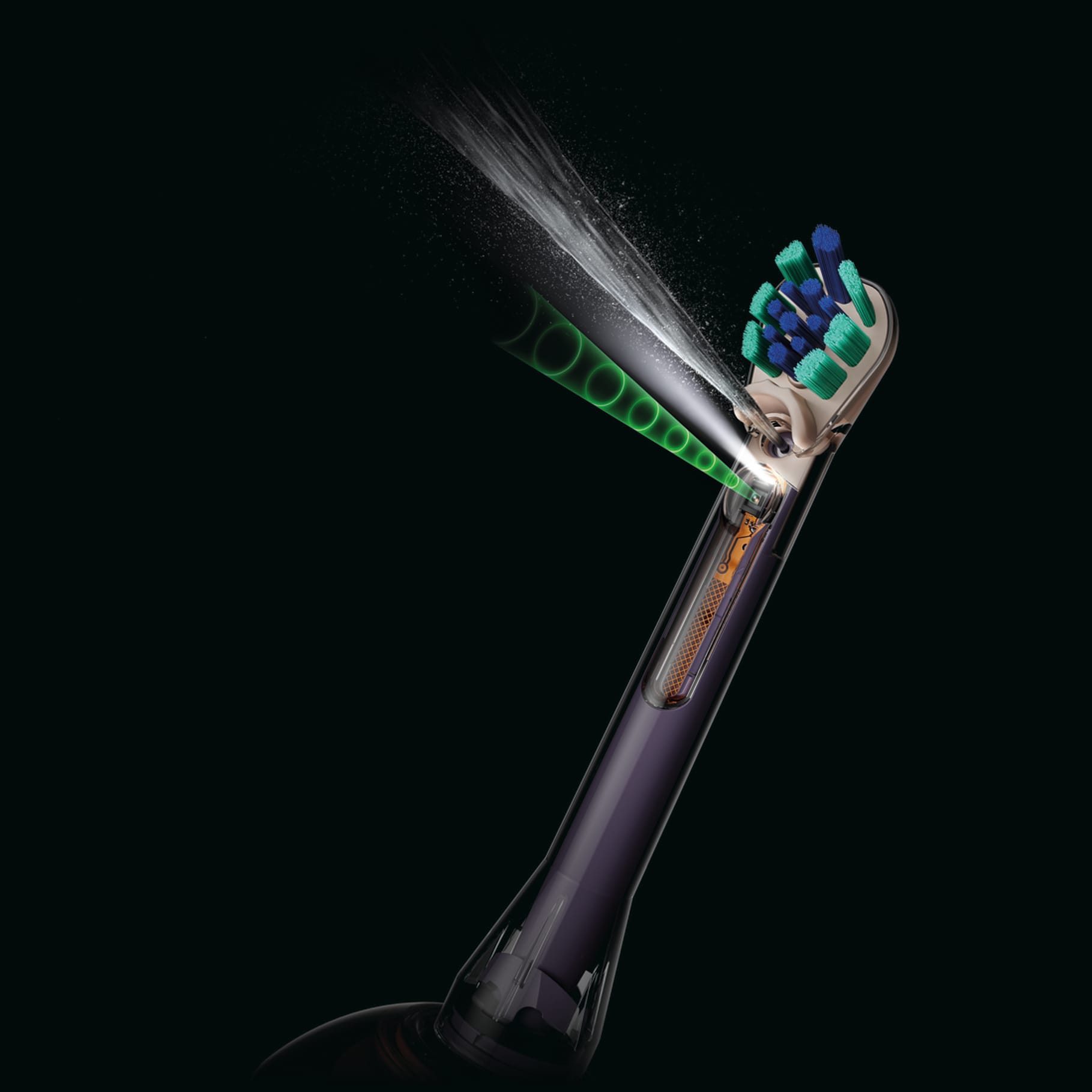
Traditional water picks are often known for their sharp, needle-like feeling. Dyson says its precision conical jet is gentler on gums and enamel. Because of its shape, it doesn’t need to use as high of pressure.
The company also claims that its jet shape is much better at removing plaque with wider coverage.
Thanks to anti-gravity tech, the CameraJet works in any orientation
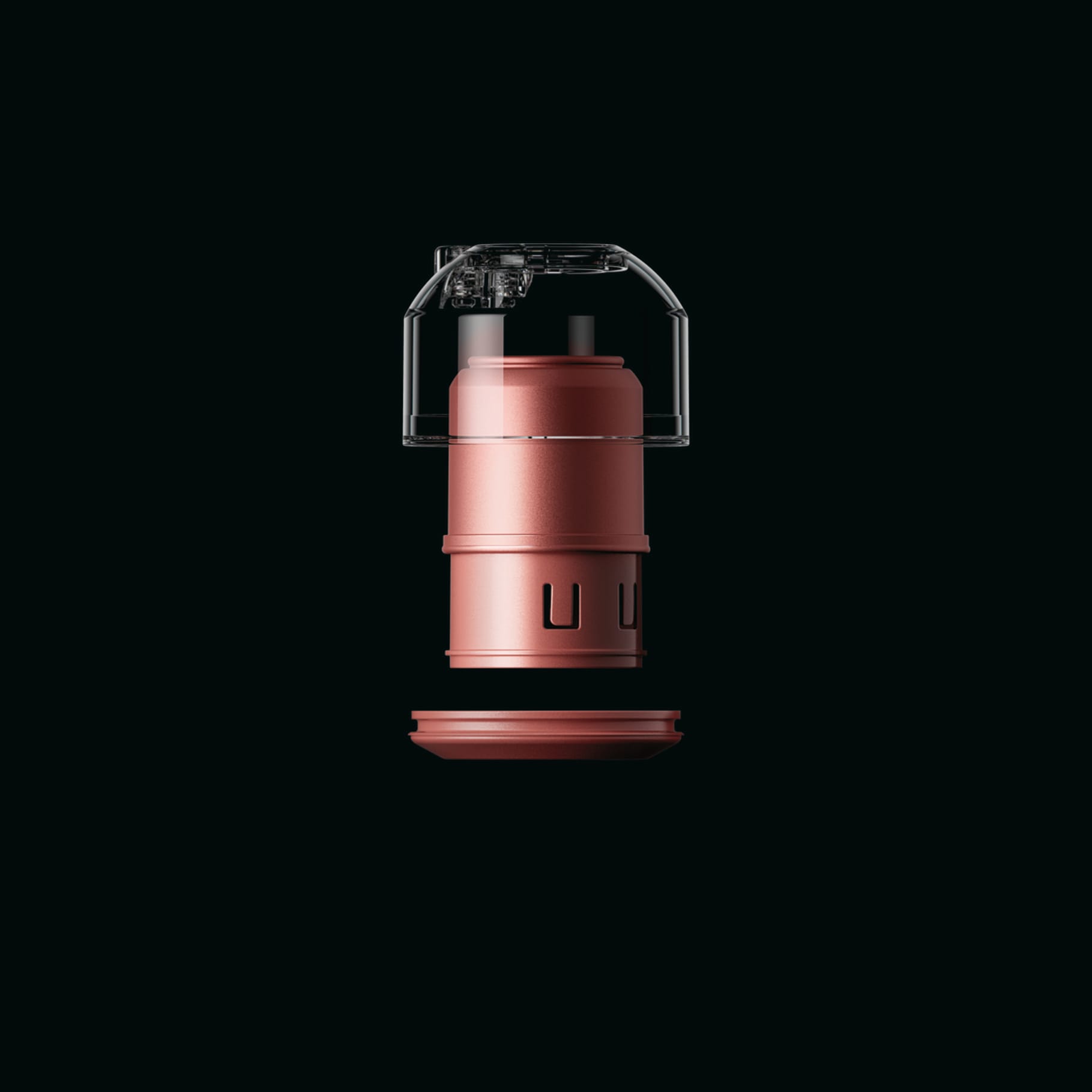
An electric toothbrush is never really vertical, unless it’s sitting stationary on a counter. So, to overcome air bubbles or other issues when you move the CameraJet all around your mouth, the mouthrinse tank features anti-gravity tech. No matter how you’re holding it or angling it, the brush should shoot the right amount of liquid at the right time.
The CameraJet retails for $499
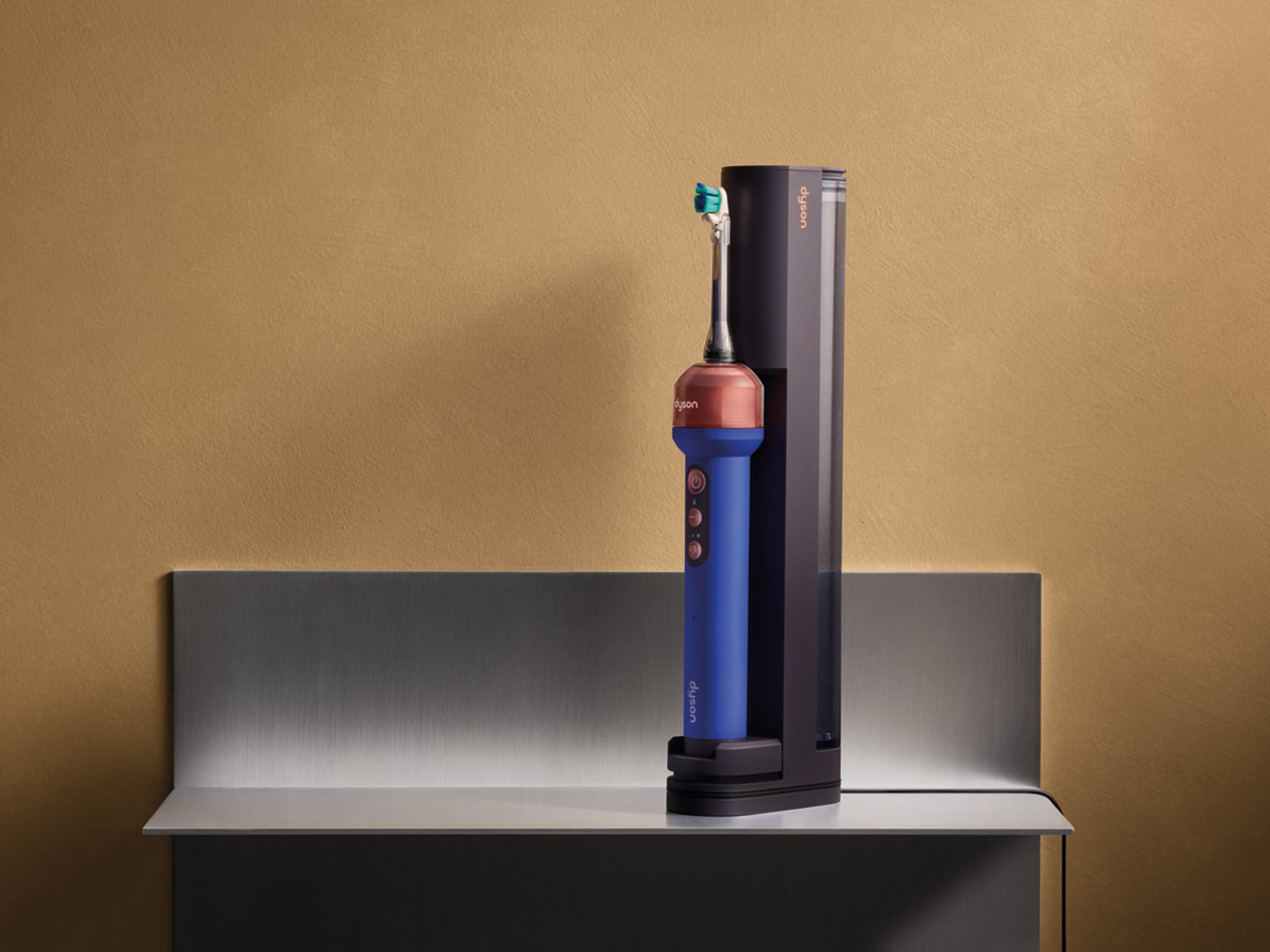
If you thought the Dyson CameraJet would be cheap, you’d be wrong. The toothbrush comes in Ceramic Ultra Blue and Ceramic Pink colors and retails for $499.
For the price, it does come with a docking station to automatically charge and refill the toothbrush. A travel case is included, so the fancy CameraJet can be used at home or on the road.
There are two regular brush heads and a charging cable in the box.
The CameraJet took 6 years to create
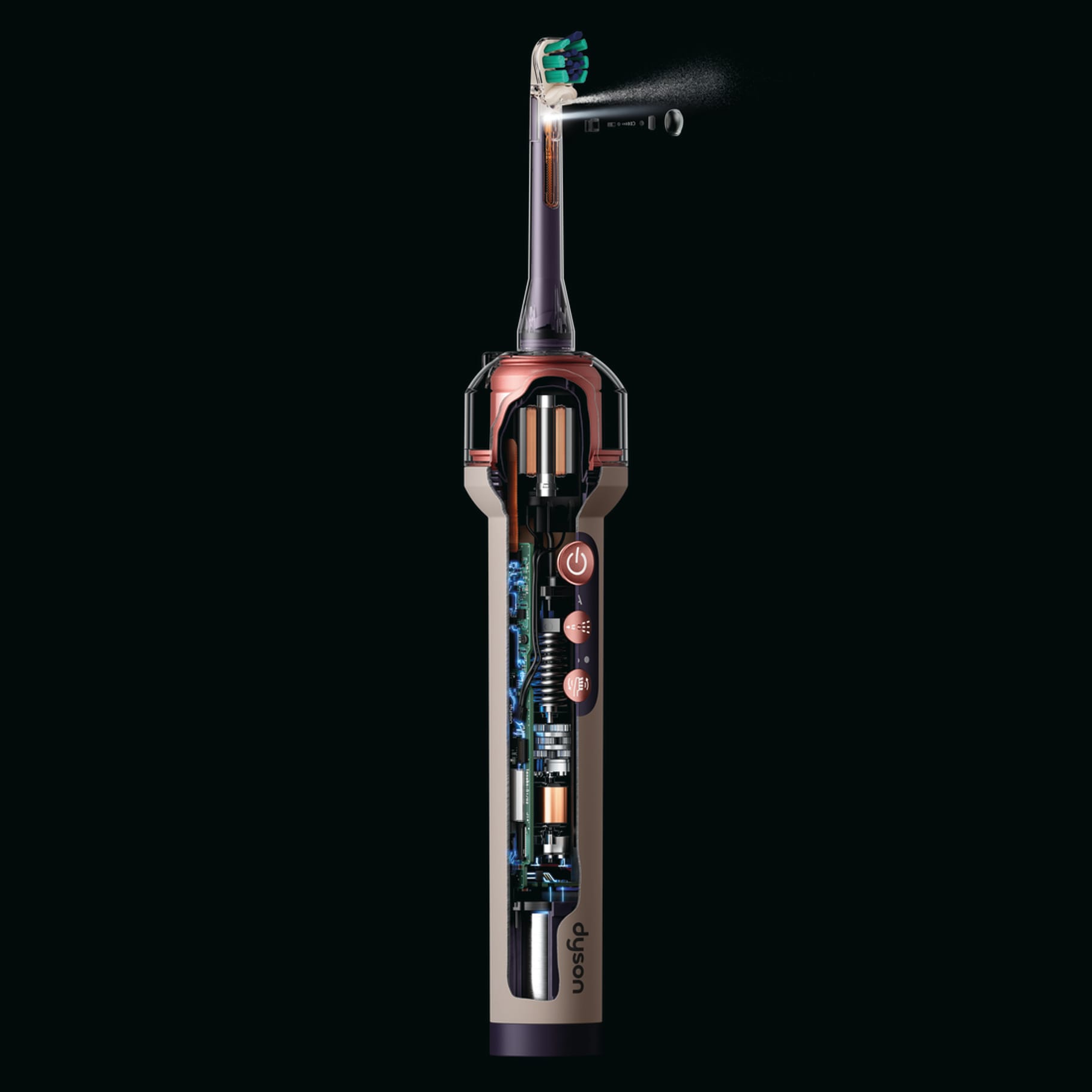
This is the kind of product that comes along every day. As a testament to that, Dyson says it took six years of research and development and engineering to create the CameraJet.
The company worked with the National University of Singapore’s Faculty of Dentistry for five years to develop its own proxy plaque. It did this to iterate more quickly on plaque removal, without needing to do a new clinical trial for every change.