
This tiny $79 e-reader could help you read more, but there's a catch
The pocket-sized Xteink X3 is a distraction-free way to read anywhere, but getting books onto it takes more effort than most people will want.

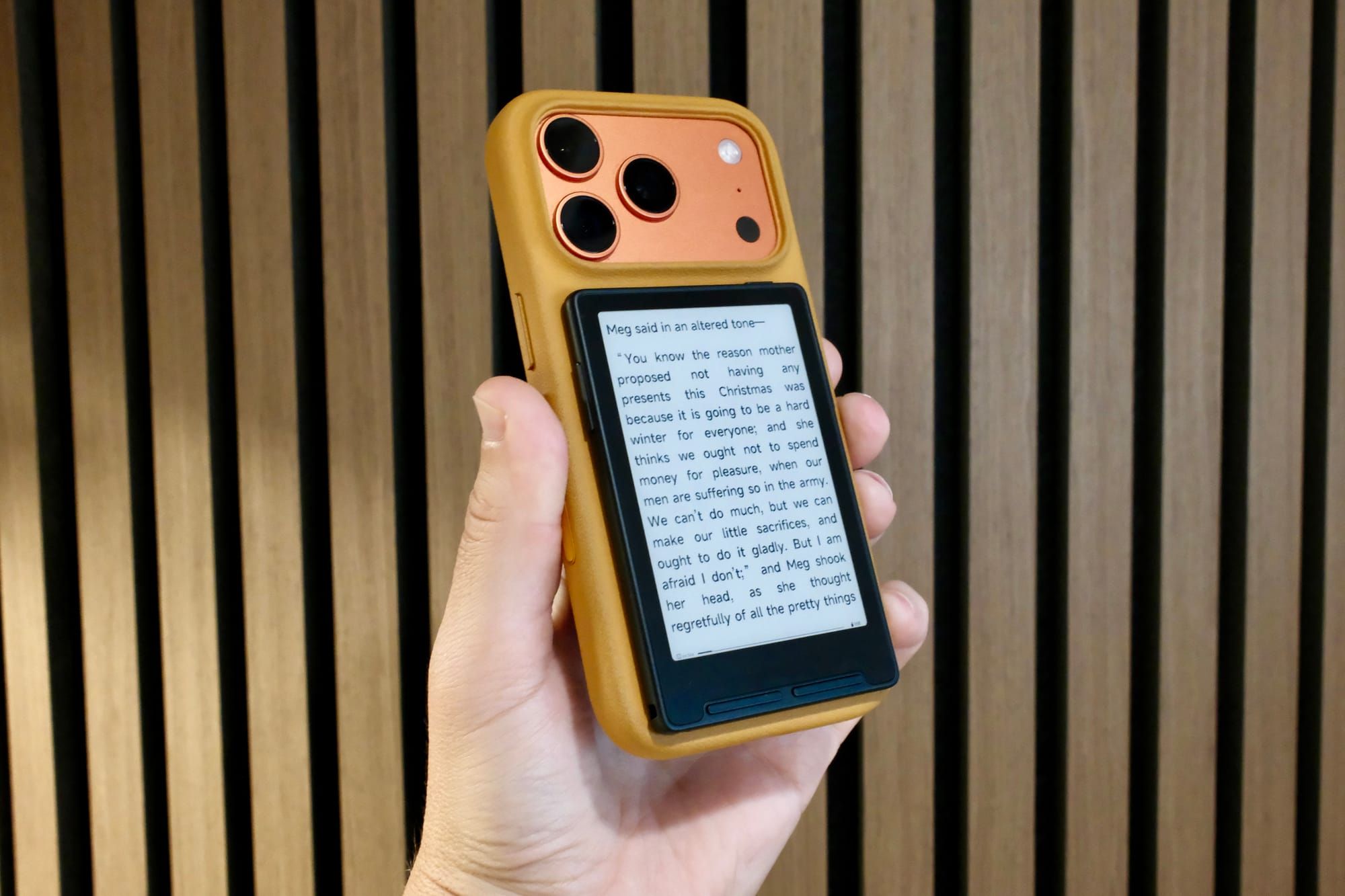
If your goal is to read more, the Xteink X3 might be the most compelling option. The tiny e-reader has a 3.7-inch E Ink screen, which allows it to fit in any pocket, purse, or even stick right to the back of an iPhone.
The benefits of reading on an E Ink screen instead of the larger phone in your hand are eye comfort and battery life savings. The X3 can last up to two weeks of reading a couple of hours each day.
No matter how you slice it, the $79 X3 is a neat gadget. But whether it will make a good reading device for you revolves around a few of the device’s quirks. Here’s a hands-on of the pros and cons of the Xteink X3.
The improvements of the tiny X3 e-reader (over the X4)
While the X3 e-reader is the latest device from Xteink, it isn’t the first. The X4 came before it with a larger 4.3-inch display—and a $69 price. You can still buy the X4 if you want to save a few bucks, but the X3 does improve on the previous model in a few ways.
Because of the smaller size, the X3 has a higher-density screen with ~250 pixels per inch. It also weighs about 20 grams less, likely due to the reduced footprint.
The new additions to the X3 include NFC and a gyroscope. You can turn the reader into an NFC tag, and the gyroscope allows the device to turn pages with a flick, left or right.
There are still some negatives
Not all of the new additions to the X3 are positive. While the X4 has a USB-C port for charging, the X3 uses a proprietary pogo pin magnetic charger. That means if you lose or break the charger, it won’t be as simple as grabbing another cable from the drawer.
The X3 uses the same software as the X4, but that’s not a win for either device. You can load EPUB files onto the included microSD card, but there’s no Kindle app or included digital bookstore. Following legal methods, you also can’t buy most e-books from most digital sellers because of DRM copy protection.
Instead, you’ll need to do more manual work to get books onto the device or read the free classics from websites like Project Gutenberg.
This is by far the Xteink X3’s biggest drawback. I’m willing to jump through a few hoops to have a pocket-sized e-reader. The books also don’t need to be free, but they need to be easy to transfer. I need as few deterrents as possible in this area to utilize this device’s full potential.

A hackable e-reader
I fell down a rabbit hole for the first few days, finding out about all of the homegrown software that can be added to the X3 and X4. There are at least a dozen different firmwares that you put on your device to change how it works.
The most popular one is CrossPoint, which helps format books better, uses different fonts, and adjusts the user interface. But this is just the tip of the iceberg. However much time you want to invest in the X3 or X4, you’ll be able to.
This is fantastic for enthusiasts and tinkerers, but it doesn’t make the device any more compelling for casual consumers who don’t want to sink time into a gadget.
Cheap and smaller e-reader alternatives
The best alternative to “a cheap e-reader” is a refurbished Kindle. You can routinely find a good one for under $50. A lot of people don’t like the Amazon lock-in, plus none of them fit in your pants pocket.
The best alternative to “a small e-reader” is the Boox Palma 2 Pro. This e-reader is narrow and most or less the size of a smartphone. This one runs Android, so you can read books through the Kindle app, Google Books, Kobo, or Libby. The problem with the Palma 2 Pro is that it costs $399.
Is the Xteink X3 worth buying?
The Xteink X3 retails for $79 and comes in either black or white. It’s wild how the 3.7-inch feels so tiny in the hand, yet is perfectly usable. It’s a great distraction-free way to read more since it can literally fit in any pocket or on the back of an iPhone.
The problem with the X3 (and the X4) is that getting those e-books onto the device to read takes a lot more work than I wish it did. The free classics don’t take too much time to download and transfer to a memory card, but how many people only want to read those books?
This is a perfect device for enthusiasts, but one that casual readers may want to skip for now.