
I wore Meta’s new Ray-Ban smart glasses without feeling like a creep. Here’s why
The new Ray-Ban Meta Audio glasses ditch the camera but keep the AI assistant, open-ear audio, and hands-free notifications.


When people rebel against having a camera in glasses for privacy reasons, the smart thing to do is to get rid of the camera. That’s what Meta is doing with the Ray-Ban Meta Audio Clubmaster. These are still AI smart glasses, but without a camera and the threat of secret spying.
What’s the point? Well, you can think of these new Meta Audio glasses as fancy wireless earbuds.
Taking out the camera removes some obvious functions and potential usefulness, like accessibility for those with low vision, but it doesn’t get rid of all the smart features. At the heart of the Ray-Ban Meta Audio is still Meta’s AI ambitions. Talk to a virtual assistant.
These glasses can also do audio updates for your schedule, notification alerts, assistant answers, and even language translations.
Those things are neat and worth exploring over time. However, my first priority for the Ray-Ban Meta Audio glasses was to check comfort and audio quality. After all, these have the battery life to be used all day. So, taking calls and listening to music will be the top uses out of the box for most people.
The comfort of the Ray-Ban Meta Audio extends to the look and feel
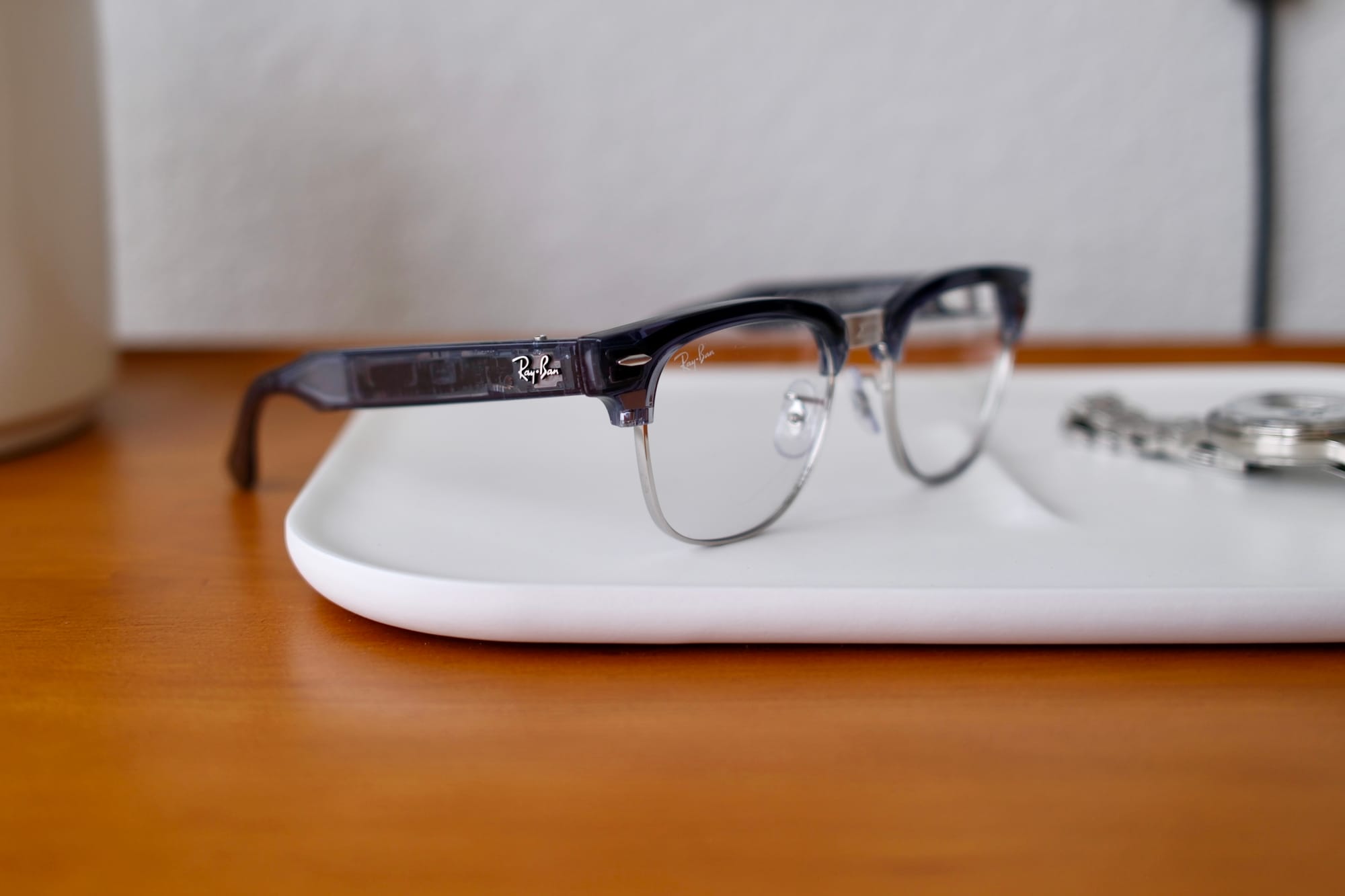
Ray-Ban Meta Audio glasses come in two distinct styles, either the Clubmaster or Burbank. Within those styles, you can get different colored frames and lenses—including transition ones.
I’m testing the Clubmaster Transparent Sky Blue with transition lenses. This particular model retails for $429. The standard clear lens Clubmaster glasses start at $349, with the full-time sunglasses coming in at $379. This is the same price breakdown for the Burbank style.
Most aspects of the fit and comfort of the Audio Clubmaster match the camera-infused Wayfarer Gen 3. For example, removing the camera only removes about 4 grams of weight between the two.
The primary difference is that the Clubmaster offers adjustable nose pads. This is likely due to the Clubmaster styling, but the Burbank also offers interchangeable nose pads, whereas the camera Wayfarers don’t have any nose pad adjustment at all.
The style and comfort of the Clubmaster is a personal one. But I found the Audio glasses perfectly fine to wear for 8+ hours at a time. At the end of the day, I was still done wearing something on my face. The transition lenses meant that I could move from outside to inside without needing to remove them.
The transition lenses themselves worked okay, but not really any different than regular glasses. Meaning, they’re only mediocre as sunglasses.
It’s obvious, but worth noting, that I did feel less self-conscious wearing the Ray-Ban Meta Audio Clubmaster out in public since they don’t have a camera. I used them to listen to music, podcasts, and audiobooks.
I found that I could turn the volume up to a 40% level before people within arm's length could hear the audio. Of course, this volume level will vary and depend on external noise and the type of content you’re listening to.
The Audio Clubmaster might be worth wearing even if you aren’t listening to anything. I liked that I didn’t have to wear an Apple Watch and I could get audio alerts in my ears when I got a text message. I didn’t have any problem responding either.
Music is key to these audio-only smart glasses
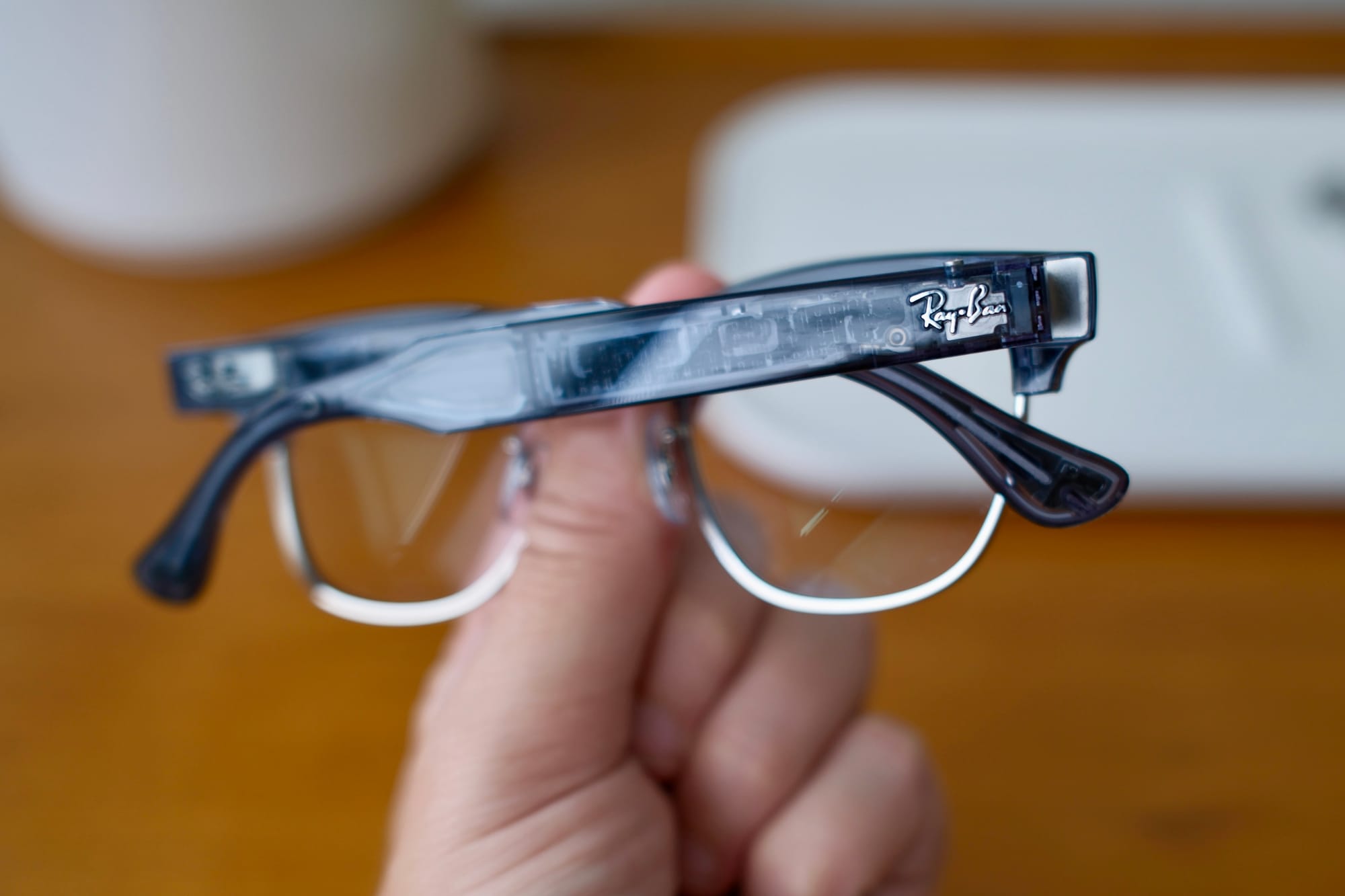
On one hand, the audio quality of the Ray-Ban Meta Audio Clubmaster is fantastic. Music at modest levels is crisp and sparkling. The most impressive part is the spatial aspect. Because your ears are completely free, instruments and voices seem more encompassing and airy.
On the other hand, these Audio glasses lack deep, low-frequency bass. That’s not shocking because of the narrow stems where the drivers reside. Still, it is a weak spot if that’s what you’re craving. Most, if not all, $130+ earbuds will do a better job in the bass department.
The Audio version of these glasses has the same 6-mic acoustic array and discreet open-ear speakers with adaptive volume as the newest Wayfarer Gen 3 glasses with a camera. In other words, voice quality for calls is excellent, even compared to other earbuds. Taking calls and sending texts with your voice works perfectly fine.
Meta advertises up to 12 hours of battery life. For several days I wore these most from morning until night. I listened to audio content for at least four hours each day, with some mixed use of Meta AI throughout. The company’s battery estimates seem on point.
Voice AI and other uses for these glasses

Does Meta have a smarter, better-working AI assistant than Siri? Probably. Though Siri AI isn’t bad. But do you think in AI terms? Are you ready to ask an assistant for help or to do something?
To confirm, you do need to have your phone with you and connected to the glasses for them to work.
Not only do you have to have your phone to serve as an internet connection, but to get real-time audio translations you’ll need to open the Meta AI app on your phone. It’s annoying, but if you do want to do that, then you can get some insights into French, Spanish, Korean, and Japanese.
If you feel comfortable connecting your Google account to Meta, then you can get deeper use out of Gmail and Google Calendar. Meta’s app also supports Apple Music, Apple Health, Spotify, Strava, and Audible, among others.
Are the Ray-Ban Meta Audio glasses worth buying without a camera?

I’ve taken the Ray-Ban Meta Gen 2 glasses with a camera on roller coasters and used them to capture the scenery while running. They can be a great tool for recording that first-person view for times you can’t hold a phone in your hand. But those uses also don’t excuse all the other times that people around you might feel uncomfortable because you’re always pointing a camera at them.
So, if you remove the camera, do these kinds of smart glasses still retain their value? Are the Ray-Ban Meta Audio Clubmaster worth between $349 and $429?
The short answer is no. For general consumers, it’s much harder to get $350, or more, of value out of what are essentially wireless earbuds. This is especially true when AirPods 5 with ANC retail for $129.
For people deeply embedded with Meta AI or those constantly on the go, combining sunglasses and earbuds isn’t a waste of money. The sound is terrific. The call quality blows away a lot of other sub-$150 earbuds. There’s a lot to like here. Plus, regular Ray-Ban Clubmaster glasses already cost around $250.
Just be aware that for most people, these glasses will be a splurge instead of a solid buying decision.