
I went running with robotic legs to see if I'd be faster—the results were unexpected
Hands-on with the Hypershell X Ultra exoskeleton. I used it for running to see how it could improve my exercise routine.

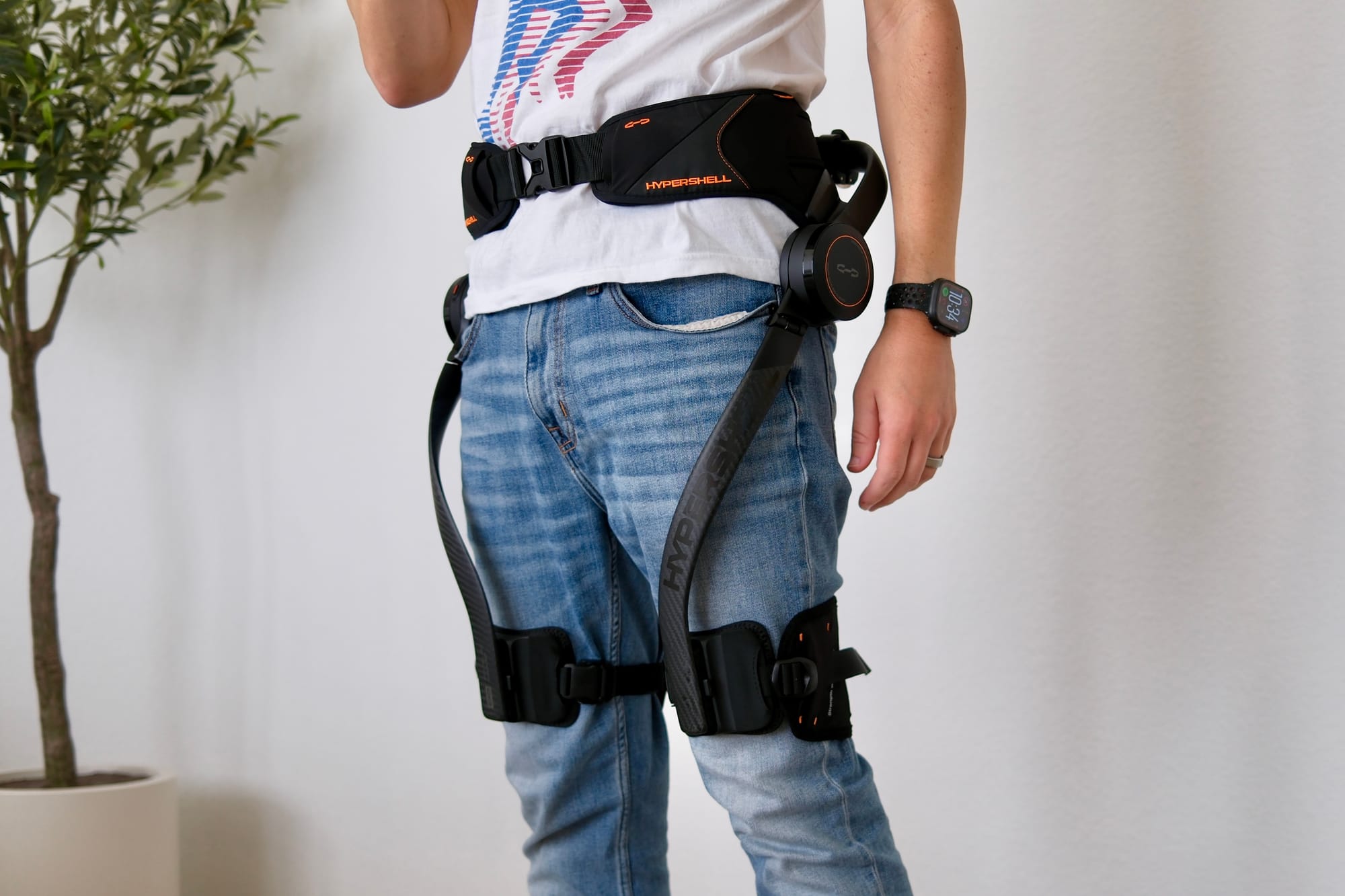
It’s easy to look at an exoskeleton like the Hypershell X Ultra and just assume the Ironman-style gadget will give you superpowers. Why else would you strap a machine like this to your legs if they couldn’t give you super speed or strength?
Admittedly, that’s what I was hoping for. So, I spent time using the Hypershell X Ultra, specifically for running, to see how it works. The bad news is that wearing this for running didn’t make me superhuman. The reality is less straightforward than that.
However, after some time with the device, I did come away with more understanding of human mobility. Even if this isn’t your next running splurge, it may be a more ideal fit for hikers and people trekking dozens of miles.
How the Hypershell X Ultra works
Hypershell has a few different exoskeletons, but the X Ultra is currently its premium model. It's advertised for walking, hiking, and running, but also cycling and mountaineering. In terms of specs, the X Ultra weighs four pounds, has up to 18.6 miles of range on a single battery, and offers a max exertion reduction of 39%.
There are 12 modes for the device, including more niche scenarios like Dune, Snow, Down Stairs, Downhill, and Gravel. I didn’t test those modes other than doing a loop around the house. The differences were very minor, if I could feel them at all. I turned on the intelligent recognition and didn’t think much about changing it.
I did some walking with the X Ultra, but mostly I was focused on running. Since I run daily, I was curious how this piece of tech would alter my ability or training.
How it feels to run with an exoskeleton

The first time I went running with the X Ultra, I was mostly struck by the weight around my hips. The four-pound device isn’t overly noticeable while walking, but once I was running, it felt much heavier. It’s an odd sensation to be running with something that feels like a giant fanny pack.
I used the X Ultra on the “Hyper” setting, which offers dynamic power for intense activities. I put it on 30% power because that estimated 4.3 miles of range. In reality, after running 3.5 miles, I still had 70% battery life. In my testing, the battery life turned out to be much better than the company’s estimates.
Even with the extra weight, I was able to keep my average 8:30-8:45 mile pace during my first run. Another thing I was not expecting was the extra attention while wearing the Hypershell X Ultra. In hindsight, I should have expected people to stare, but I was very aware of it as a focal point as soon as I left the house. This aspect faded over time and with more use, but people will be curious about it.
After my first two runs, I noticed the back of my legs, right above my knees, were the area that felt the most sore. It didn’t hurt, but it was like working out a new muscle. Do you activate slightly different muscles with this device? It didn’t feel like it when using it, but you might. After a week or so, the mild soreness subsided.
I’ve changed the intensity setting and used the auto-detect activity modes. In practice, there was very little difference in the feel while running an 8:30-mile pace. Most recently, I selected Running+ and turned the intensity up to 70%. I still didn’t feel like it was running for me. And to be fair, Hypershell says Running+ is for sprints and other types of runs.
But just in general, I could feel the motors adding a tiny bit of assistance to my legs on flat ground. The feeling is subtle, but I could feel it most on the back of my legs, like someone was giving a little push on that area, rather than pulling my legs forward from the front.
While I wanted the X Ultra to pull me up my 200 feet of elevation on inclines, it never felt like a miracle machine. It felt like it pulled its weight enough during uphill climbs to not add insult to injury, but I didn’t feel it lifting my legs more than normal.
After using the X Ultra several times, the help it offered just didn’t justify keeping it charged, wearing the extra weight, and attracting extra attention.
Is the Hypershell X Ultra worth spending money on?

The Hypershell X Ultra retails for $2,000, so it’s a pricy investment in any context. Whether you plan to use it for fitness, recreation, or just casual daily use. The good news is that there are cheaper models.
The Hypershell X Carbon has a little less power, a little less battery life, and is just a tad heavier. That one comes in around $1,600. This would still be a solid option for a full active lifestyle. The Hypershell X Go retails for $830 and is a good fit for more casual activities like walking and some light hiking.
I didn’t turn into a superhero runner while wearing the Hypershell X Ultra. In fact, I didn’t notice it lighten my brisk running pace at all. It’s just not a running tool I would recommend for people who want to use it exclusively for that. But I also don’t think it’s worthless. This product could be an excellent one for power hikers and for people who do extended amounts of walking.
For people who want more training help, the X Ultra does have a fitness mode. Instead of assisting mobility, it applies pressure against you to make you work harder. This is kind of like wearing a weighted vest or any other product to build up more stamina.
The Hypershell X Ultra is the sleekest exoskeleton I’ve used. The mobile app worked well and was responsive. It might not be made for running, but it is a solid product for certain uses.